Home/ Treatments/ Ultrasound Guided Treatments/ USG Guided Hydrodissection
Ultrasound Guided Treatment

USG Guided Hydrodissection

Targeted Pain Relief With Image-Guided Precision

USG Guided Hydrodissection is a minimally invasive procedure used for selected peripheral nerve entrapment conditions. Using real-time ultrasound guidance, a solution is carefully placed around the affected nerve to help separate it from surrounding tissues and reduce mechanical irritation or compression.
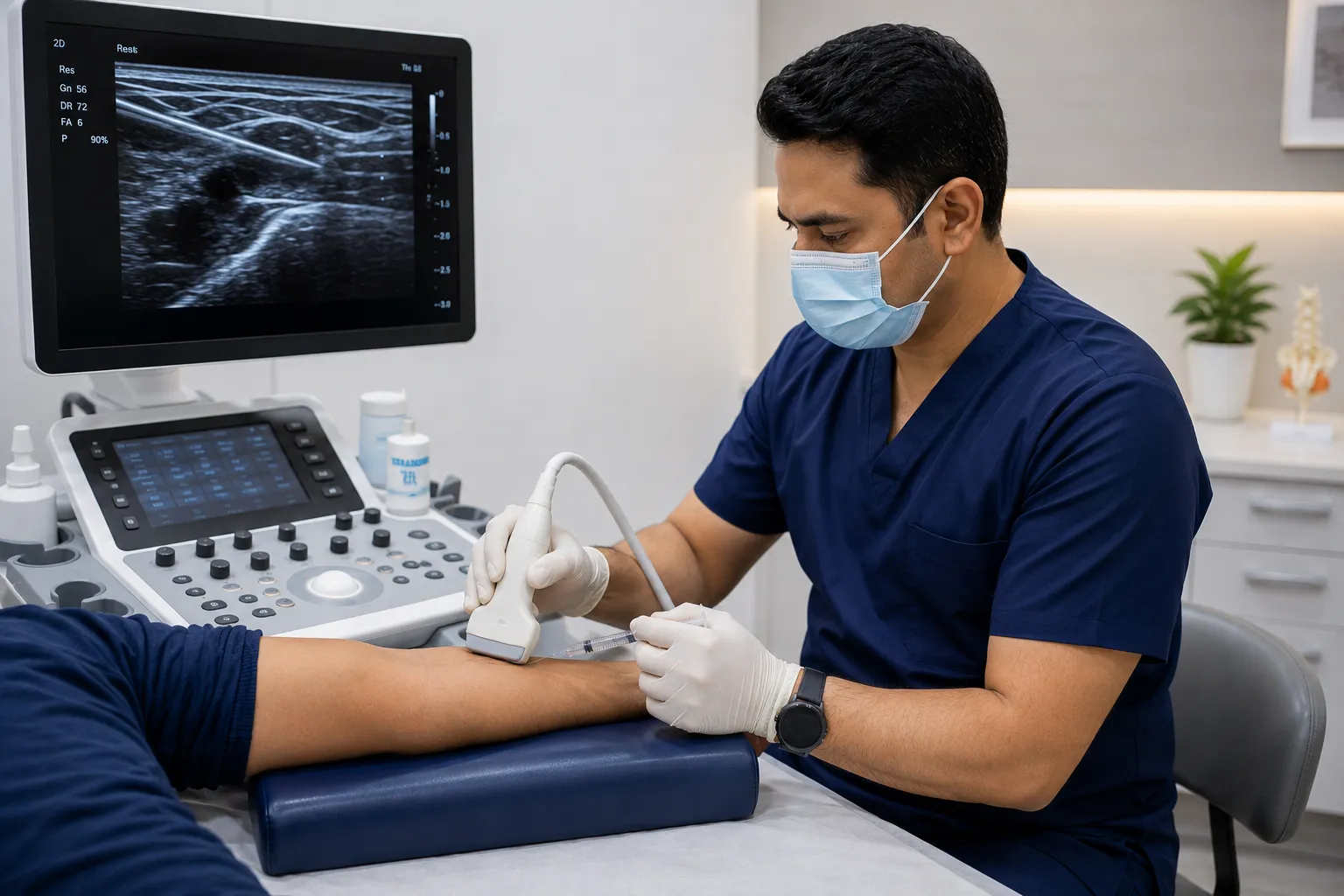
Doctor performing USG guided hydrodissection procedure
Treatment Type
Nerve Hydrodissection
Guided By
Ultrasound
Approach
Minimally Invasive
Recovery
Depends on condition
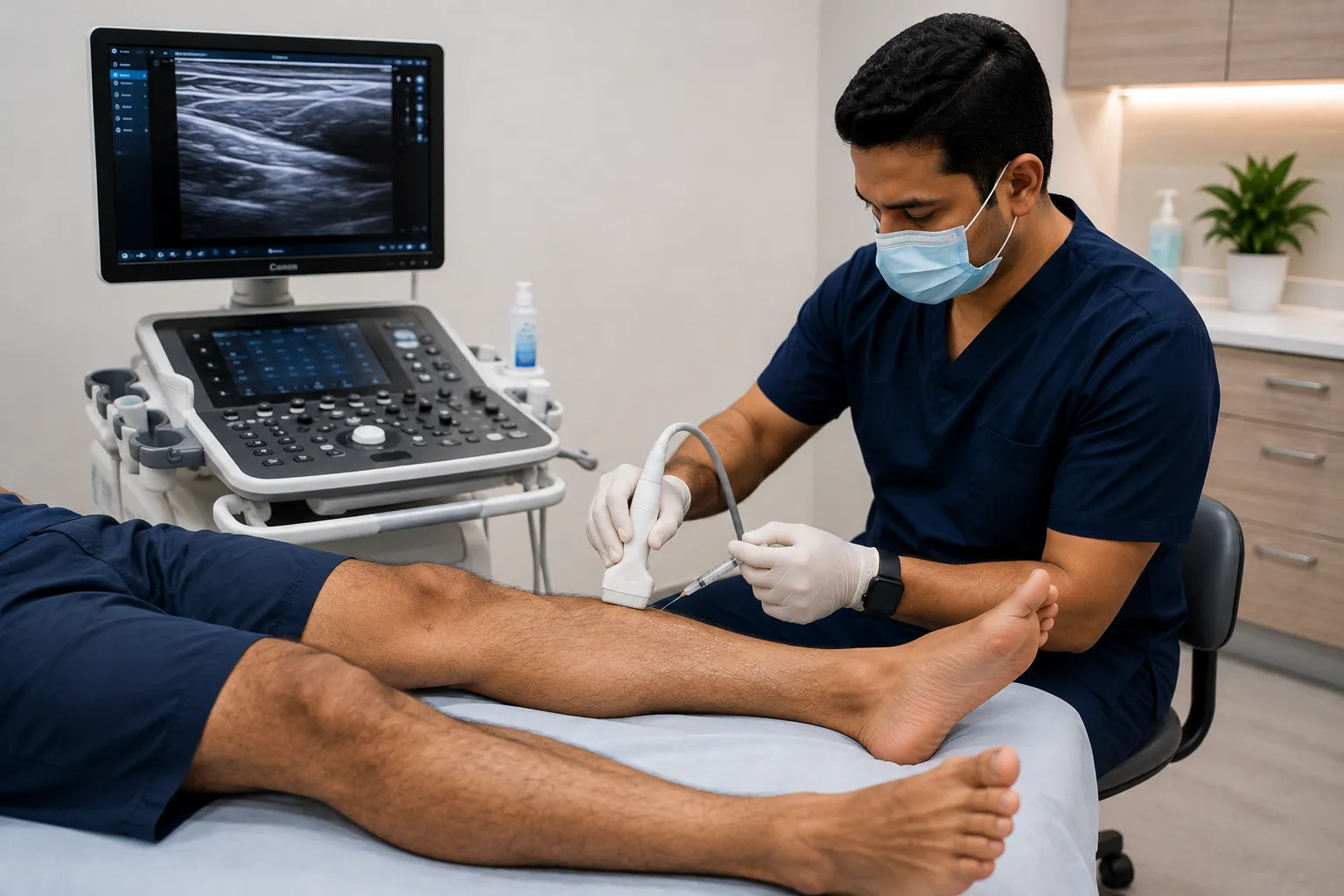
Ultrasound guided procedure being performed on a patient's leg

What Is USG Guided Hydrodissection?

USG Guided Hydrodissection, also called ultrasound-guided nerve hydrodissection or perineural injection therapy, is a minimally invasive technique used to treat selected peripheral nerve entrapments.

During the procedure, high-resolution ultrasound is used to identify the affected nerve and surrounding structures in real time. A carefully selected solution is then injected around the nerve to create separation between the nerve and nearby fascia, ligaments, scar tissue, or other structures that may be contributing to irritation or compression.

The goal is to reduce mechanical restriction around the nerve and potentially improve pain, sensation and function. The exact solution used depends on the nerve condition, clinical findings and treatment plan.

Hydrodissection has been studied most extensively in carpal tunnel syndrome, while research is also emerging for other peripheral nerve entrapment conditions.

Ultrasound-guided precision
Minimally invasive approach
Targeted treatment around the affected nerve
May help reduce nerve irritation or compression
No conventional surgical incision
Usually performed as an outpatient procedure
01
Assessment

The pain specialist reviews your symptoms, medical history and examination findings. Ultrasound and, when appropriate, nerve conduction studies or other investigations may be used to identify the affected nerve.

02
Ultrasound Guidance

A high-resolution ultrasound probe is placed over the treatment area. The affected nerve and surrounding structures are visualized in real time so the procedure can be performed with accurate anatomical guidance.

03
Treatment

A fine needle is carefully advanced under ultrasound visualization. The selected solution is placed around the nerve to help separate it from surrounding tissues and potentially reduce local mechanical irritation or compression.

04
Post-Procedure Care

After the procedure, you are observed for a short period and given specific instructions based on the nerve treated and the type of injection used. Follow-up may be recommended to assess pain, sensation and functional improvement.

Potential Benefits of USG Guided Hydrodissection
Targeted Treatment

The injection is directed around the affected nerve rather than treating a large surrounding area.

Ultrasound Guided Precision

Real-time ultrasound allows the doctor to visualize the nerve, needle and surrounding anatomy during the procedure.

Minimally Invasive

The procedure uses a needle rather than a conventional surgical incision and is generally performed without hospital admission.

Potential Pain Relief

By addressing mechanical irritation around an entrapped nerve, hydrodissection may help reduce nerve-related pain and discomfort.

May Improve Function

Improvement in pain and nerve-related symptoms may help patients use the affected area more comfortably.

Short Recovery

Because there is no conventional surgical incision, recovery is generally shorter than recovery from open surgery, although the expected recovery period varies between patients.

Clinical research has reported improvements in symptoms and function following ultrasound-guided hydrodissection, particularly in mild to moderate carpal tunnel syndrome. However, outcomes depend on the underlying condition and individual patient factors.
You May Be a Candidate If:

USG Guided Hydrodissection may be considered when symptoms are associated with a suitable peripheral nerve entrapment or irritation and conservative treatment has not provided adequate relief.

You may be considered for the procedure if:

  • Your symptoms suggest a localized peripheral nerve entrapment.
  • Pain, numbness, tingling or altered sensation follows the distribution of an affected nerve.
  • Clinical examination and imaging support nerve irritation or compression.
  • Conservative treatments have not provided sufficient improvement.
  • Your doctor believes a targeted perineural procedure may be appropriate.
  • You are looking for a minimally invasive treatment option before considering more invasive procedures.

Important Note:

Hydrodissection is not suitable for every type of nerve pain or every patient. Severe nerve damage, significant structural compression, infection at the injection site, certain bleeding risks and other medical factors may change the treatment plan. Suitability should be determined after a detailed clinical assessment.

Why Choose Vedant Pain Management Clinic?

Experienced Care

A detailed clinical assessment helps identify the likely source of your nerve-related pain before treatment is recommended.

Image-Guided Procedures

Ultrasound guidance allows the treatment area and relevant anatomical structures to be visualized during the procedure.

Personalized Treatment

Your treatment plan is selected according to your symptoms, diagnosis, nerve involved, previous treatments and individual medical needs.

Minimally Invasive Options

When clinically appropriate, minimally invasive procedures may provide an option between conservative treatment and more invasive surgical approaches.

Before USG Guided Hydrodissection

Before your procedure, your pain specialist may:

  • Review your symptoms and medical history.
  • Perform a focused neurological and physical examination.
  • Identify the suspected affected nerve.
  • Review relevant investigations when required.
  • Discuss previous treatments and their response.
  • Review medicines, allergies and relevant conditions.

Your doctor will determine whether hydrodissection is appropriate for your condition.

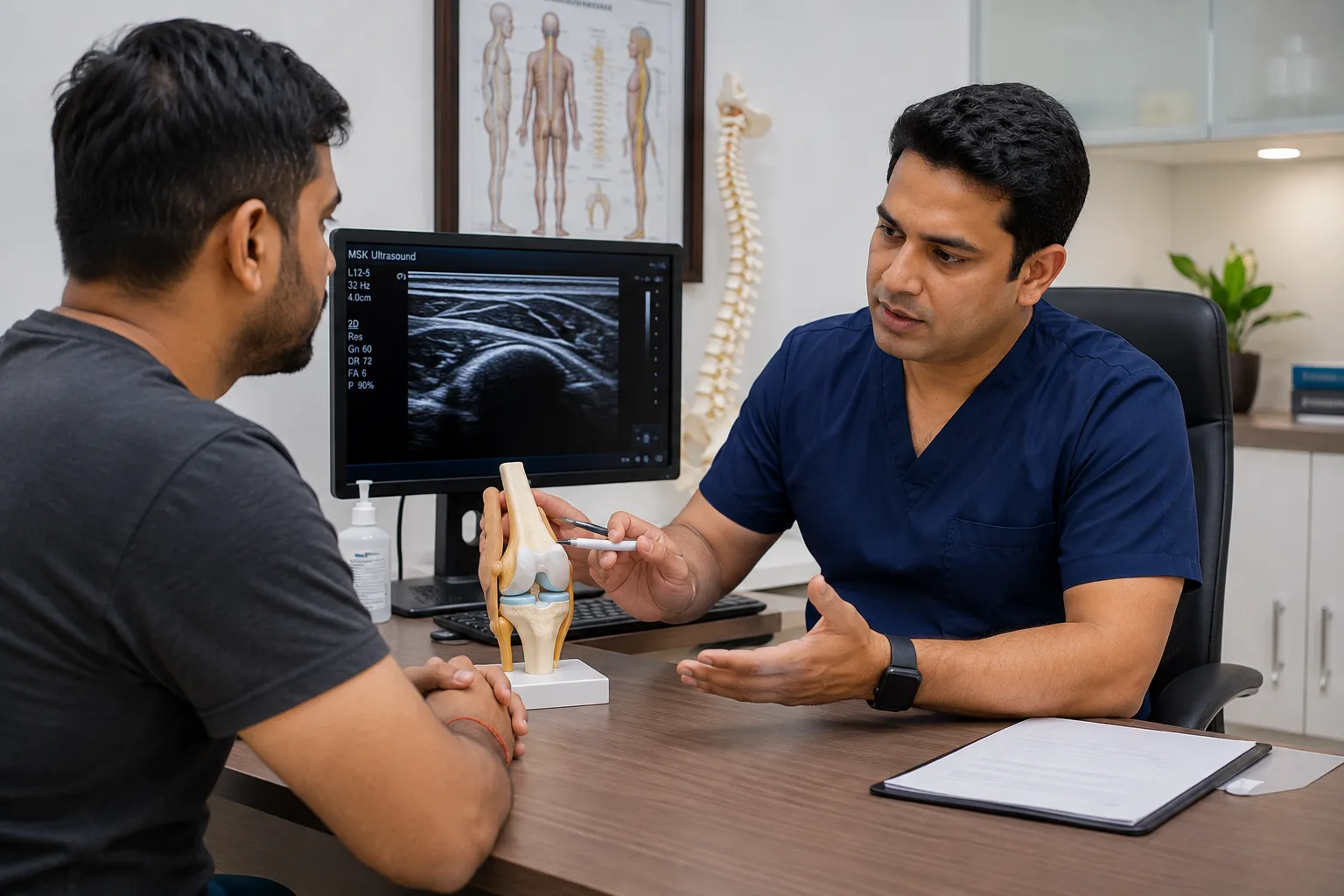
Patient consulting with a doctor before treatment
After USG Guided Hydrodissection

After the procedure, you may be monitored briefly before going home. Your post-procedure instructions will depend on the nerve treated and the solution used.

You may be advised to:

  • Follow the activity restrictions provided by your doctor.
  • Avoid excessive strain on the treated area initially.
  • Monitor pain, numbness, weakness or other new symptoms.
  • Continue prescribed exercises or rehabilitation when recommended.
  • Attend follow-up appointments as advised.
  • Contact the clinic if you develop concerning symptoms.

The timing of improvement varies. Some patients may notice changes soon after treatment, while others may require more time and follow-up.

Risks & Considerations

Like any injection-based medical procedure, USG Guided Hydrodissection can have potential risks and side effects. These may include temporary soreness, bruising, bleeding, infection, temporary numbness or weakness, irritation of nearby tissues, or a reaction to the injected solution.

Although ultrasound guidance improves anatomical visualization and procedural accuracy, it does not eliminate all risks.

The expected benefits, alternatives and potential risks should be discussed with your pain specialist before treatment.

Seek medical attention promptly if you experience severe or worsening pain, significant weakness, spreading redness or swelling, fever, or other concerning symptoms after the procedure.

Published studies have generally reported a favorable safety profile for ultrasound-guided hydrodissection, although the quality and amount of evidence varies by nerve condition and injectate.

Frequently Asked Questions

What is USG Guided Hydrodissection?
USG Guided Hydrodissection is an ultrasound-guided procedure in which a solution is injected around an affected peripheral nerve to help separate it from surrounding tissues that may be contributing to irritation or compression.
What conditions can it treat?
It is primarily considered for selected peripheral nerve entrapment conditions. Carpal tunnel syndrome has the strongest research base, while hydrodissection may also be considered for certain other focal nerve entrapments depending on the patient's diagnosis and clinical findings.
Is the procedure painful?
Most patients tolerate the procedure well. Local anesthetic may be used depending on the treatment plan. You may feel pressure, mild discomfort or brief sensations during the injection.
How long does the procedure take?
The treatment is generally performed as an outpatient procedure and usually does not require a long hospital stay. The exact duration depends on the nerve being treated and the complexity of the procedure.
How soon can I return to normal activities?
Many patients can return home the same day. Your doctor will advise when to resume normal activities based on the nerve treated, your symptoms and the response to treatment. Strenuous activity may need to be limited temporarily.
Are there any risks associated with it?
Yes. Possible risks include temporary soreness, bruising, bleeding, infection, temporary numbness or weakness, irritation of nearby structures and reactions to the injected solution. Your doctor will explain the risks relevant to your case before treatment.
How many sessions may be required?
The number of treatments varies from person to person. Some patients may require a single procedure, while others may need further treatment or rehabilitation depending on the underlying nerve condition and response to the initial procedure.
Is it suitable for everyone?
No. Hydrodissection is not appropriate for every patient or every type of nerve pain. A detailed assessment is required to determine whether the suspected nerve entrapment and your overall health make the procedure appropriate.
Will the pain come back after the treatment?
Relief can vary between patients. Hydrodissection addresses the local nerve environment, but the underlying cause of nerve irritation may continue to affect symptoms. Your doctor may recommend rehabilitation, activity modification or other treatments to reduce the chance of recurrence.
Can Vedant Pain Management Clinic help me?
Vedant Pain Management Clinic provides evaluation and interventional pain management options for patients with nerve-related and other chronic pain conditions. Your pain specialist can assess your symptoms and determine whether USG Guided Hydrodissection or another treatment is appropriate for you.

Don't Let Nerve Pain Limit Your Daily Life

If you are experiencing persistent pain, numbness, tingling or symptoms associated with a possible nerve entrapment, a detailed evaluation can help identify the right treatment approach.
Book an Appointment with Vedant Pain Management Clinic